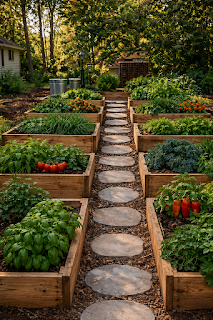

I always wanted a backyard vegetable garden, but the thought of renting a heavy tiller, destroying my lawn, and fighting weeds all summer sounded like a nightmare. Then, I discovered the "No-Till" raised bed method. It changed everything.
In 2026, the biggest trend in rustic outdoor garden areas isn't just about growing food—it’s about creating a beautiful, sustainable space without breaking your back. The "No-Till" method (also called lasagna gardening) allows you to build a garden directly on top of your grass. Here is how you can create your own low-cost spring garden this weekend.
(We independently review everything we recommend. When you buy through our links, we may earn a commission at no extra cost to you.)
1. Building the Frame (The Aesthetic Look):
The key to a beautiful budget backyard makeover is the layout. Using untreated cedar or pine wood, build rectangular boxes. Place them at least 3 feet apart so you have room to walk or add a gorgeous stone pathway later. 👉Click to shop Galvanized steel corner brackets for raised beds
2. The "No-Till" Secret (Cardboard!):
Do not dig up your grass! Instead, lay thick, plain brown cardboard directly over the grass inside your wooden frames. Water the cardboard until it is soaking wet. This acts as a natural weed barrier that eventually breaks down and feeds the earthworms. It is the easiest spring garden idea you will ever try.
3. Layering the Soil:
Over the wet cardboard, add layers of organic matter. Start with a mix of high-quality compost, peat moss, and vermiculite. This creates a light, fluffy soil mixture that vegetable roots love. Because you aren't walking on the soil, it never gets compacted. 👉Click to shop Organic vegetable garden potting mix soil
4. The Planting Layout:
When planning your rustic outdoor garden, place tall plants (like tomatoes on trellises) at the back or center so they don't block the sun from shorter plants (like lettuce and carrots).
You don't need to be a farmer to grow your own food. You just need a few wooden boards, some cardboard, and a free Saturday.
You Might Also Love:
👉DIY Grill Station Under $400: How to Build Your Dream Outdoor Kitchen in One Weekend
A Beginner-Friendly No-Till Bed Plan
No-till gardening means disturbing the soil as little as practical and adding organic material at the surface. It is not a promise that weeds disappear overnight, and it does not replace good drainage, suitable plants or seasonal care. Begin with a small bed you can maintain consistently rather than covering the whole yard at once.
Choose the Site Carefully
Observe sunlight, water movement and access to a hose. Avoid placing a bed where runoff collects against a building or where tree roots will be heavily disturbed. If you suspect contaminated soil, aggressive perennial weeds or a drainage problem, seek local advice before covering the area. Call the relevant utility service before staking or digging anywhere.
- Cut existing annual growth low and remove seed heads and persistent invasive roots.
- Cover the surface with overlapping plain cardboard if appropriate for the site, removing tape and glossy labels.
- Wet the cardboard so it stays in place.
- Add finished compost and the mulch recommended for the crops and local climate.
- Plant into the upper layer, opening only the space needed for each transplant.
Maintain the Soil From the Top
Add clean compost when the bed needs replenishing and keep soil covered with plants or suitable mulch. Pull young weeds before they seed. Do not pile mulch directly against stems, woody trunks or the house. Water according to the plants and weather rather than following a fixed daily schedule; the surface can look dry while the root zone is still moist.
A soil test can prevent unnecessary amendments. More fertilizer is not automatically better, and fresh manure or unfinished compost can harm plants. Use reputable local extension guidance for crop timing and soil recommendations. Over time, a gently managed bed becomes easier to work, but observation remains essential. The goal is healthy soil structure and a manageable routine, not a perfectly untouched garden.
Want to see more useful home and kitchen finds?
Browse All Amazon Favorites